Backflow testing for restaurants and food service
Carbonators, dish machines, and chemical dispensers put a commercial kitchen in the severe hazard class, which is why the device on the service is usually an RPZ. The test takes water off that line for up to an hour, so it happens before service or after close, not during.
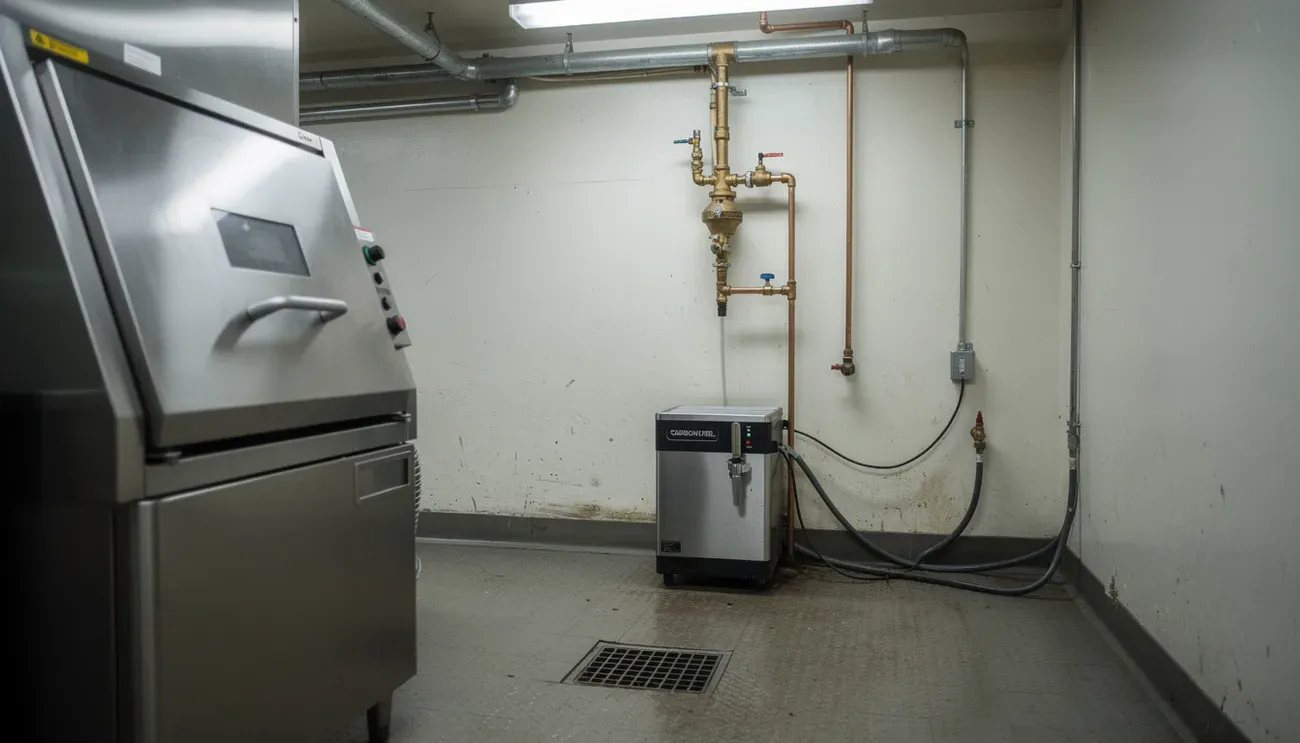
Why food service is a severe hazard
Durham Region’s by-law follows the CSA B64 series to classify each connection. A commercial kitchen almost always lands in the severe hazard class (section 1.1(p): water with additives or substances that under any concentration can create a danger to health), because of what sits on the plumbing:
- Carbonated beverage systems. If a check fails, CO2 can migrate back into copper supply lines and form copper carbonate, which is toxic. This single risk is why soda systems have their own backflow requirements in the standard.
- Dish machines and chemical dispensers. Detergent, rinse aid, sanitiser and degreaser injected on the water line.
- Coffee and steam equipment, ice machines, pre-rinse sprayers, mop sinks with hose connections. Each a potential cross-connection.
- Grease and process water on the same plumbing as potable water.
Severe hazard means the premise isolation device is a reduced pressure principle assembly (RPZ): two checks and a relief valve that dumps water to a drain if either check leaks. It is the right device and it is also the one that fails most often in kitchens.
Where the device is in a restaurant
For a stand-alone restaurant, on the incoming water service, usually in a back room, basement, or utility closet near the meter. For a restaurant in a plaza, the plaza’s premise device is on the plaza service and belongs to the property owner; your unit may have its own device on the branch that feeds your kitchen. Both are tested annually. Both may generate notices. Check which device the notice names and who it is addressed to.
Timing: before open, after close, never during
The test isolates the device and takes water off that line for the readings, roughly 30 to 60 minutes for an RPZ. If the device is on the main service, that is the whole restaurant. So we book:
| Restaurant type | Usual slot |
|---|---|
| Breakfast and lunch place | After close, mid-afternoon |
| Dinner service | Morning, before prep |
| All-day | Early morning, before the first shift, or late evening after the last |
| Franchise or QSR with a corporate compliance calendar | Whatever the calendar says; we fit it |
Early morning, evening and weekend slots are part of how we run, not a favour. Say your hours when you request a quote and we work around them.
What the visit looks like
- Tester arrives at the agreed off-hours time; a manager or key-holder provides access.
- Device located and confirmed against the Region’s record.
- Shut-offs closed, gauge on, relief valve and both checks tested to CSA B64.10.1, shut-offs reopened. Water back on.
- Tag applied or updated. Report filed through BSI Online within the by-law’s 28-day window. You get a copy.
- Reminder 30 days before next year’s due date.
If the RPZ fails (weeping relief valve, fouled first check), the tester notifies the Region within 24 hours (section 6.4), we coordinate a licensed plumber for the rebuild, and we return for the retest at another off-hours slot. Full detail on the failed test page.
Landlord, tenant, and who pays
The by-law puts testing and repair costs on the owner (sections 6.3 and 6.4). For the plaza premise device, that is the landlord. For a device inside your unit serving your equipment, the lease usually passes the obligation to the tenant. When a notice arrives, read which device it names and who it is addressed to. If both a plaza device and a unit device are due, we test both on the same visit and invoice each party separately.
Keeping the RPZ out of trouble between tests
- If the relief valve is dripping when nothing is running, the first check is marginal. Book a look before it fails outright.
- Keep the area around the device clear of stock and mop buckets; the tester needs the test cocks and shut-offs.
- Do not let anyone plug or bypass the relief valve discharge because it made a puddle. Section 6.7 of the by-law prohibits bypassing a device without the Commissioner’s authorization, and a plugged relief valve removes the fail-safe.
- Make sure the floor drain under it actually drains.
Health inspections and the tag
The test tag on the device (with the test date, tester details and licence number, per section 6.10) is what a public health inspector or Regional inspector looks for. Keep the report copy with the restaurant’s other compliance records; the by-law requires five years on site (section 6.6).
Restaurants and food service: questions
Why does a restaurant need an RPZ specifically?
Because a commercial kitchen is a severe hazard under CSA B64: carbonated beverage systems can push CO2 back into copper lines and form copper carbonate, dish machines and dispensers inject detergents and sanitisers, and grease and process water are on the same plumbing. Severe hazard means a reduced pressure principle assembly, which fails safe by discharging to a drain if a check leaks.
Can you test during a slow afternoon instead of after close?
If the device is on the main service, water to the whole restaurant is off for the readings, which is hard to do during any service. If the device is on a branch (a carbonator line, say), a quiet mid-afternoon can work. Tell us the layout and we will say which is realistic.
My landlord received the notice. Whose job is it?
The premise isolation device on the plaza's water service belongs to the property, so the owner is responsible for that one. A device inside your unit serving your equipment may be yours under the lease. Read the notice to see which device it names, and check the lease. We can test both on one visit and bill separately.
How often does a restaurant RPZ fail?
More often than an office double check. Kitchens run hard water through the device all day, debris and scale foul the first check, and the relief valve starts to weep. When it does, it needs a rebuild kit from a licensed plumber and a retest. Catching a marginal check on the annual test and budgeting for a rebuild is cheaper than a failure mid-season.
Do you also test the small backflow preventer on the carbonator?
If it is a testable assembly on the Region's record, yes. Many carbonator devices are small non-testable dual checks that a plumber replaces on a schedule rather than tests. The notice tells you what the Region has on file; send it and we sort out which is which.
Book a slot before open or after close
Tell us the address, where the device is, and your service hours. We schedule around them and have the report filed before your next shift.