Backflow testing for medical and dental offices
Dental chairs, sterilisers, suction systems, lab sinks and clinical waste put a medical or dental office in the severe hazard class. The premise device is an RPZ, and it is tested once a year in a slot that never overlaps with patients.
Why medical and dental facilities are on the Region’s severe list
By-law 24-2018 defines a high or severe hazard as any cross-connection involving water with additives or substances that, under any concentration, can create a danger to health (section 1.1(p)). Health care and dental facilities are the textbook case in CSA B64. On the plumbing of a typical practice:
- Dental unit water lines and the bottles, tubing and handpieces attached to them.
- Suction and evacuation systems, wet-ring or dry.
- Sterilisers and autoclaves, ultrasonic cleaners, and their drains.
- Lab sinks, model trimmers, and darkroom or processor connections in older offices.
- Clinical hand-wash sinks and eyewash stations.
Any one of those, with the right pressure drop on the main, could pull water backward. That is why the premise isolation device is a reduced pressure principle assembly (RPZ): it fails safe by discharging to a drain if a check leaks, rather than letting anything move toward the municipal supply.
Where the device sits in a practice
For a stand-alone clinic, on the incoming service in a utility room, basement or storage room near the meter. In a shared medical or professional building, the building owner has a premise device on the main service, and individual suites with higher-hazard use often have their own RPZ on the branch feeding the suite. Both are on the Region’s record and both are tested annually. Read the notice: it names the device and the addressee.
Testing without touching patient hours
An RPZ test takes roughly 30 to 60 minutes and requires water to that line to be off. For a premise or suite device that is the whole practice for that window, so we book:
- Before the first appointment. Common for practices that open at 8 or 9.
- After the last patient. Common for practices that close at 5 or 6.
- Saturday or a non-clinic day. For practices with a closed day.
The office manager is usually the contact. We confirm the window, remind them the day before, and the tester is in and out inside it. Sterilisation and equipment start-up routines are not affected; if you have a specific sequence that needs water at a particular time, tell us and we work around it.
What the tester checks on a dental or medical RPZ
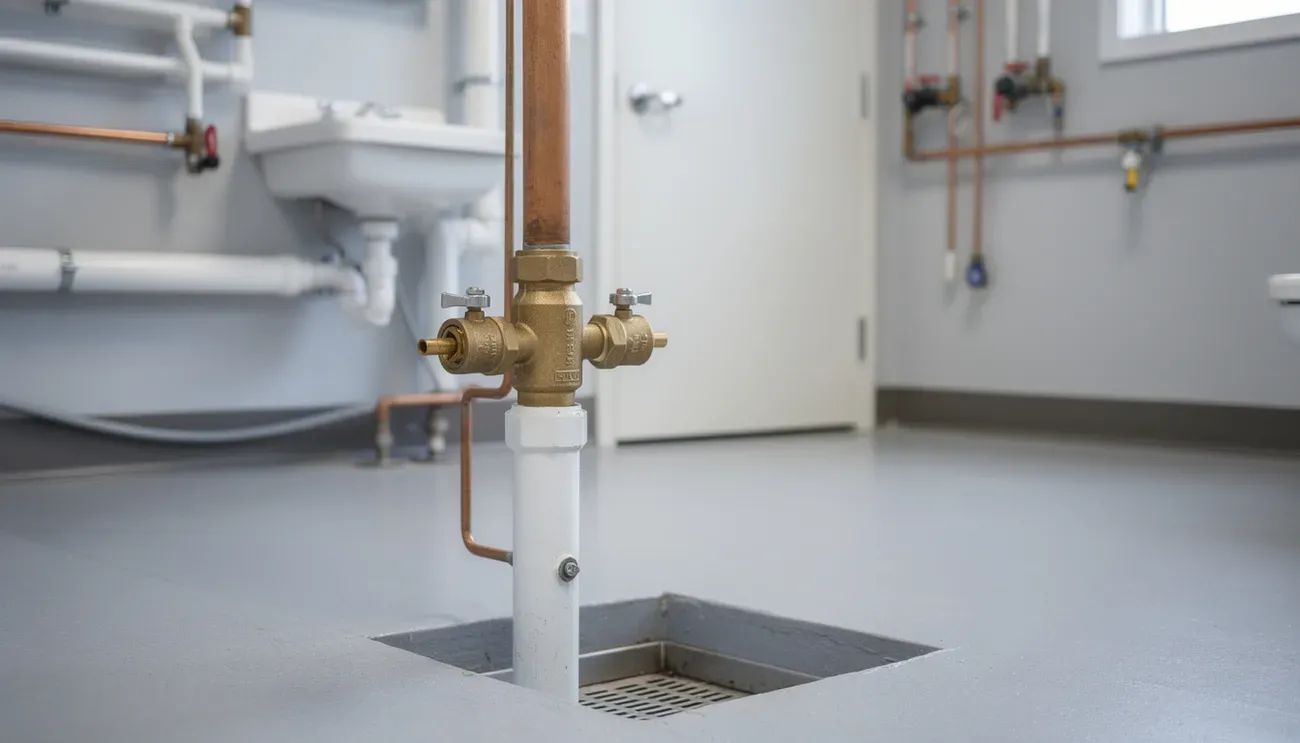
Relief valve opening point, first check, second check, shut-off valves and test cocks, to CSA B64.10.1. The tester also looks at the installation: an RPZ must not be in a pit or where it could be submerged, it needs a drain sized for the relief valve discharge, and it must be protected from freezing. Suites sometimes have RPZs installed in ceiling spaces or closets without drains; the tester notes it and we tell you plainly. Correcting it is plumbing work.
Details on the device page: reduced pressure principle assembly (RPZ).
If it fails
Section 6.4 of the by-law: the tester notifies the Region and area municipality within 24 hours, and repair or replacement proceeds immediately at the owner’s expense. Most RPZ failures are a fouled first check or a relief valve rebuild, done by a licensed plumber with a kit. We coordinate it and return for the retest in another quiet-hours slot. The failed test page has the full sequence.
Records for the practice
Keep the report copy with the practice’s compliance records; the by-law requires five years on site (section 6.6). The tag on the device carries the test date and tester licence number (section 6.10). Both are what an inspector, a college auditor, or a landlord looks for. We send a copy of the report and a filing confirmation after every test, and a reminder 30 days before the next one.
Medical and dental: questions
Why is a dental office severe hazard?
Dental unit water lines, suction and evacuation systems, sterilisers, X-ray processors where still in use, and lab sinks all put biological and chemical contaminants on the plumbing. Under CSA B64, which the by-law adopts, that is a severe hazard connection, and the required premise device is a reduced pressure principle assembly (RPZ).
We are a small clinic in a medical building. Is the device ours?
The building's premise isolation device on the main service belongs to the property owner and is tested by them. Your suite may have its own device on the branch serving your clinic, especially in newer buildings or where the survey classified your suite separately. The notice names the device and the addressee. Send it and we tell you which is which.
Can the test happen while we are open?
It can if the device is on a branch that only feeds non-clinical fixtures, but for a premise device it takes water off the whole suite for up to an hour, which usually means no patients. We book before the first appointment, after the last, or on a Saturday, and we confirm the window with your office manager.
Does the RPZ need to be in a specific place?
It must not be in a pit or anywhere it could be submerged, it needs a drain that can take the relief valve discharge, and it must be protected from freezing. Most dental and medical RPZs are in a utility room. If yours is in a ceiling space or a location without a drain, the tester notes it; correcting it is plumbing work.
A slot that never touches patient hours
Tell us the address, where the device is, and your first and last appointment times. We test around them and file the report.